ROBERT COOPER
Artistic Director


Chorus Niagara 2009 - 2010 Season

Chorus Niagara Home
Discover


Discover


The Houses Stand
Not Far Apart
John Estacio

Commissioned jointly by Chorus Niagara, the Vancouver Bach Choir, the Richard Eaton Singers of Edmonton, and the Grand Philharmonic Choir in Kitchener-Waterloo, The Houses Stand Not Far Apart will receive its Toronto premiere with the Orpheus Choir of Toronto and Chorus Niagara on November 1, 2008, with a second performance in St Catharines on November 2.


Listen to John Estacio describing the
four movements of
The Houses Stand Not Far Apart
(excerpted from a CBC Choral Concert program)

The Houses Stand Not Far Apart is the latest work by leading Canadian composer, John Estacio, and confirms his stature as a major musical force of the 21st century. He and his long-time collaborator, poet and playwright John Murrell, winner of the 2008 Governor General’s Award, have produced a choral work that is as provocative as it is beautiful. This latest successful collaboration by Estacio and Murrell follows their acclaimed operatic achievements: Frobisher (2007) and Filumena (2003).

Estacio, the composer, and Murrell, the writer, have previously collaborated on two Operas: Filumena and Frobisher. This time out, their goal was to write something that would resonate with humanity in the 21st century.

Estacio said he looked at past works when he was trying to decide on a subject for the cantata. He acknowledges the considerable list of extant music pleading for peace, understanding and hope, including works in the classical, folk and indie rock genres.

"And I decided what I really needed was a set of new words written by somebody living in the here and now in the 21st century. John Murrell wrote a beautiful text that serves as the basis of the music," he said. "And then I just go about amplifying his words, trying to bring focus to phrases and things like that as I write the piece."

“It’s just a different canvas,” he sighs. “There’s so much wonderful folk and pop music that deals with world order, and crying for peace. Those songs are certainly potent and have done wonderful things. My canvas is slightly larger—it involves considerably larger forces coming together to bring it to life. But, other than that, I don’t find that much different. It’s still music and words; we’re just using different colours.”

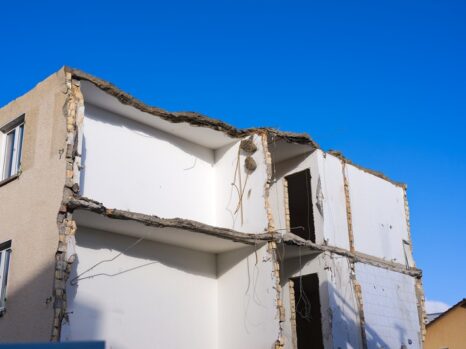
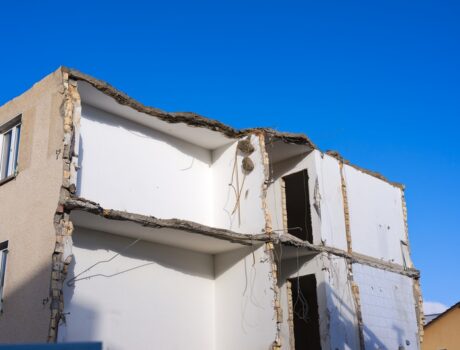
When speaking about the specifics of The Houses Stand Not Far Apart, Estacio’s voice fills with latent enthusiasm, seemingly painting the words in the air and admiring their affect. “It’s really a metaphor,” he begins simply. “There are two houses divided by a small river. It’s a metaphor for two worlds, for two countries, for two different tribes, separated geographically while remaining so close. They have a lot of strong similarities, and they don’t realize how similar they are. In fact, it’s only small differences passed on from generation to generation that lead to unrest and, eventually, destruction.” The nature of the piece may seem inherently political, but Estacio shies away from the word.

“I’m not really interested in politics. For lack of a better word, I guess that’s what it is, but I’m more interested in humanity, rather than politics,” he clarifies. “I’m not interested in borders and boundaries. The piece is about how humanity relates with itself, and how great opportunities to rise above things are realized, such as when it comes to making music and doing wonderful pieces of art. However, it doesn’t seem to take that much for things to fall apart in times of a crisis. That’s at the crux of the piece. It’s really about how we relate to each other, and how simple it is for us to just bomb each other when we feel like it.”

Estacio Interview Play List
The houses stand not far apart
They are dancing
They are weeping
Forgive the years
(from a CBC Choral Concert interview)


© Chorus Niagara, St.Catharines, Ontario
Chorus Niagara photography by Kevin Argue
Site design by Henry J. de Jong